Celebrating our 2025–26 Open Research Fellowship cohort
Seven projects, the questions behind them, and what has come of the work so far
What does an Open Research Fellowship project look like?
Three cohorts in, this remains the question we're asked most often by colleagues considering an application for an . There is no single answer. An idea for a Fellowship might begin with a need for more reproducible training, a weakness in the way research methods are documented, or a group of colleagues whose contribution to research is not always fully recognised. It could involve a new tool or resource, but it could equally start with a question about research culture and the evidence needed to improve it.
Our 2025–26 Open Research Fellows began with seven very different questions. During their Fellowships, they worked with researchers, technical professionals, research groups, publishers and external partners to investigate those questions and develop practical responses.
Their work has produced open learning materials, project documentation, surveys and research evidence, professional frameworks, workshops, presentations and new collaborations. Several further outputs, including guidance, journal articles and training resources, remain in development beyond the formal Fellowship period.
Just as importantly, the Fellowship gave colleagues dedicated time to pursue work that would otherwise have had to compete with their existing responsibilities.
“It gave me the protected time I needed to implement my plan, present my results and realise there is much more work I can do on this topic.� Dr Ashma Krishan, 2025–26 Open Research Fellow |
Making microbial genomics training open and reproducible
Danna Gifford, from the School of Biological Sciences, developed MEG4All, an openly available and reproducible training course in microbial evolutionary genomics.
Using a published Escherichia coli outbreak dataset, the course takes learners through a complete bacterial genomics workflow. It combines concise explanations with practical command-line and R exercises covering topics including genome annotation, antimicrobial resistance, pangenome analysis and phylogenetics.
The outputs include an open course website, downloadable Quarto teaching materials released under a CC0 licence, reusable analysis scripts and R visualisations. The material documents its data sources, software commands and analytical decisions, while also helping learners understand limitations and common analytical problems rather than treating bioinformatics tools as “black boxes�.
Feedback during development led Danna to make computational requirements clearer, standardise the organisation of files and scripts, and expand the guidance on interpreting potentially misleading results. The course will soon be available and can be reused for teaching or self-directed learning and adapted by others for their own requirements.
Improving the usefulness of research preregistration 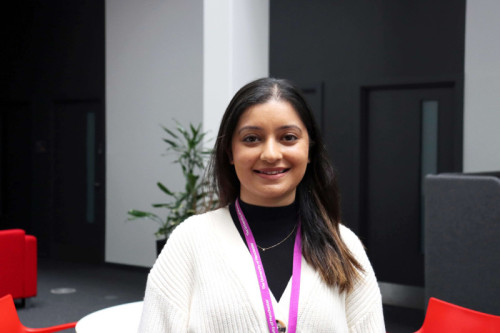
Dr Ashma Krishan, from the School of Health Sciences, investigated how researchers at Manchester understand and use preregistration, and what guidance could help them use it more effectively.
A University-wide survey received 64 responses from researchers across seven Schools. It explored researchers’ experiences of preregistration, what they believed a good preregistration document should contain, and the support they needed. The responses identified demand for practical guidance on what to preregister, what information to include, how to complete the process and how to record changes to an original plan.
Ashma shared the findings through a Centre for Biostatistics seminar and a poster presented at the UK Reproducibility Network Conference. She also developed a set of common terms and definitions relating to preregistration, drawing on existing Open Science Framework and SPIRIT guidance.
Further work includes learning materials and potentially a dedicated course providing practical support for researchers who want to preregister their studies. Her Fellowship has also created connections that can help this work continue:
“As I put together an advisory group for my Fellowship, it gave me an opportunity to meet researchers from other faculties and understand their thoughts on preregistration. Their support has enabled me to realise there is further work that can be done on preregistration beyond the Fellowship.� Dr Ashma Krishan, 2025–26 Open Research Fellow |
Supporting trustworthiness checks during journal review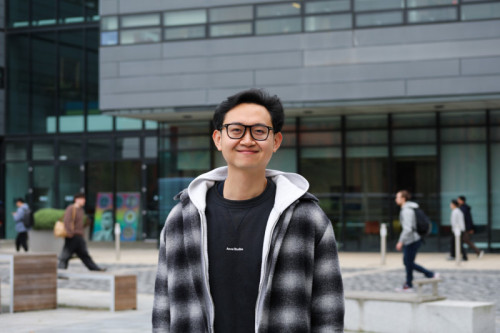
Zewen Lu, from the School of Health Sciences, developed INSPECT-JR, an initiative designed to help journal editors and peer reviewers assess the trustworthiness of randomised controlled trials before publication.
Building on the existing INSPECT-SR approach, Zewen reviewed and adapted trustworthiness checks for the journal editorial context and developed an initial set of candidate checks for a Delphi survey and consensus process.
An online stakeholder discussion brought together 17 participants representing six journals or journal groups. Their feedback directly informed the proposed structure of the tool, including how different checks could fit within stages such as initial editorial screening, peer review, revision and acceptance. An international, multidisciplinary Expert Advisory Panel has also been established to review and advise on the study.
Outputs to date include an INSPECT-JR study protocol and workshop materials. The project was presented through oral and poster presentations at the 2026 NIHR Statistics Group Annual Conference, where Zewen received the Best Rapid Fire Talk Prize. A full-day workshop in January 2027 will bring researchers, statisticians, methodologists and journal representatives together to explore how trustworthiness checks could be applied in practice.
Embedding open documentation in everyday research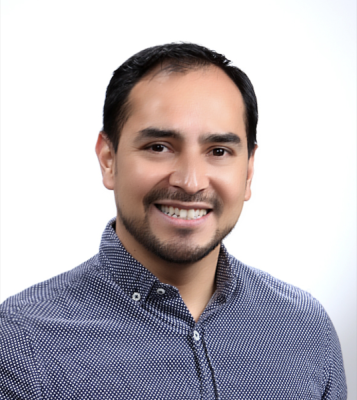
Dr. Ramiro Bravo (a Research Data Manager based in the Core Facilities of Faculty of Biology, Medicine and Health), worked with research groups and Core Facilities to improve project documentation, protocol sharing and recognition of technical contributions.
His project supported teams in incorporating platforms such as and into everyday research activity. This included working with the Genome Editing Unit to digitalise and strengthen protocols, creating a shared Protocols.io workspace for the MOXIE collaboration, and developing clearer approaches to documenting stages of the research lifecycle.
Outputs include a UK Reproducibility Network conference poster, an openly shared project-documentation template, research-group presentations and contributions to University material connecting Open Research with research culture and REF 2029.
During the Fellowship, the emphasis developed from introducing individual platforms to considering the wider culture surrounding how research is documented and shared. Ramiro described this as a process of “cultural transformation�:
“What I valued the most was the opportunity to bring research groups and Core Facility staff together, creating and developing better ways for research collaboration and documentation, seeing how people are open for collaboration, and strengthening my leadership skills.� Ramiro Bravo, 2025–26 Open Research Fellow |
He also highlighted the professional development involved in influencing practice across teams:
“It strengthened my leadership skills, particularly my ability to lead without formal authority and to see the impact of this leadership in Open Research.� Ramiro Bravo, 2025–26 Open Research Fellow |
Recognising Research Technical Professionals
Two of our Fellows explored the role, skills and recognition of Research Technical Professionals from complementary perspectives.
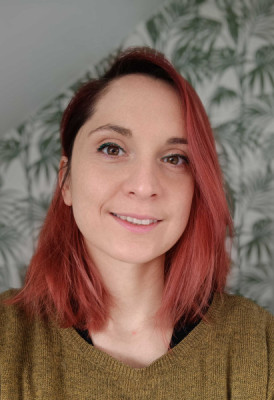 Dr Zuzanna Zagrodzka, from the Department of Computer Science, investigated how Research Technical Professionals contribute to Open Research across UK institutions. She designed a UK-wide survey that received more than 100 responses from people in a range of research-support roles and disciplinary settings, supplemented by five in-depth interviews.
The project is developing evidence about the Open Research activities undertaken by Research Technical Professionals, the extent to which those contributions are recognised, and whether existing training and support meet the needs of different professional communities.
Data collection has been completed and analysis is continuing. Outputs so far include the survey dataset, an interview protocol, transcripts and presentations to technical and Open Research communities. The results will inform a journal manuscript and further conference presentations, while potentially supporting more targeted training, guidance and signposting.
“The Open Research Fellowship gave me dedicated time to investigate a topic I care about: how Research Technical Professionals contribute to open research. It enabled me to undertake a research project that I would not otherwise have been able to pursue.� Dr Zuzanna Zagrodzka, 2025–26 Open Research Fellow |
“It significantly expanded my professional network and led to many interesting conversations with colleagues from different institutions and backgrounds who are working towards similar goals.� Dr Zuzanna Zagrodzka, 2025–26 Open Research Fellow |
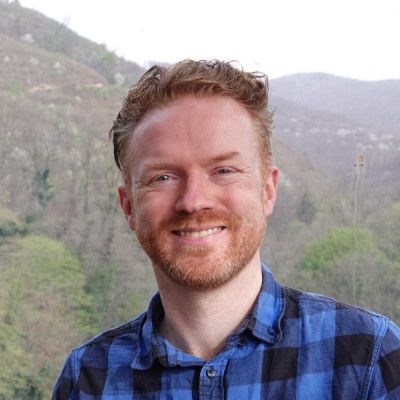 Phil Reed, also from the Department of Computer Science, focused on the professional development and recognition of digital Research Technical Professionals and data stewards at Manchester and beyond.
Phil designed and led a full-day Manchester workshop that brought together people from different Faculties, services and institutions. The event produced a public report and a set of recommendations intended to support improved recognition and representation.
The Fellowship also enabled him to contribute substantially to , a national skills and competency framework for digital Research Technical Professionals. Version 2.0 of the framework was published during the Fellowship, and Phil was subsequently invited to become its Adoption and Engagement Lead.
Other outputs include a refreshed UKRN primer for people working in Research Data Management, a Research Data Conversations seminar, conference presentations and funding proposals intended to sustain this work beyond the Fellowship.
Recognising wiki contributions as research outputs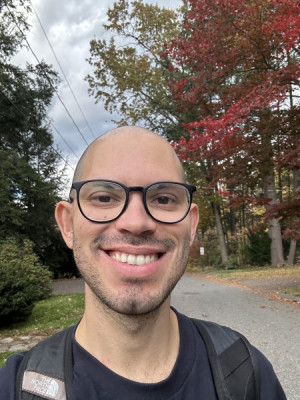
Dr Guilherme Fians, from the Faculty of Humanities, explored how contributions to Wikipedia and other collaborative platforms might be understood and recognised as co-produced research outputs.
His research included a cross-Faculty survey, 11 semi-structured interviews and a participatory workshop involving 13 participants. The findings revealed considerable interest in collaborative knowledge platforms as spaces for producing, sharing and engaging with research.
The Fellowship also led to the creation of a cross-institutional Wikimedia and REF Working Group, bringing together representatives from Wikimedia, universities and Open Research teams. The group is considering how contributions to wiki platforms might feature in institutional accounts of research culture and Open Research practice.
Guilherme has shared the work at University and external events. Further outputs will include a learning resource on sharing research through Wikipedia and other open knowledge platforms, a conference paper and a journal article examining the potential of wiki platforms for open knowledge co-production.
Creating the time and connections needed for change
The seven projects differ greatly in their subjects, methods and outputs. What brings them together is that each began with a challenge identified through the Fellow’s own research or professional practice.
Some Fellows already had a clear resource or tool in mind. Others began by gathering evidence, consulting communities and refining their proposed response. Several projects changed direction as Fellows learned more from the people they hoped to support.
This is an important part of the Fellowship model. Improving research does not always start with a finished solution. It can start with recognising that something is difficult to learn, poorly documented, insufficiently understood or not given the recognition it deserves.
The Fellowship provides protected time to investigate that need. It also provides access to a community through which Fellows can find collaborators, test ideas and connect their work to wider conversations about research practice and culture.
The achievements of the 2025–26 cohort show what can happen when this work does not have to be fitted into spare time. Their formal Fellowship period may have ended, but many of the resources, relationships and initiatives they created are continuing to develop.
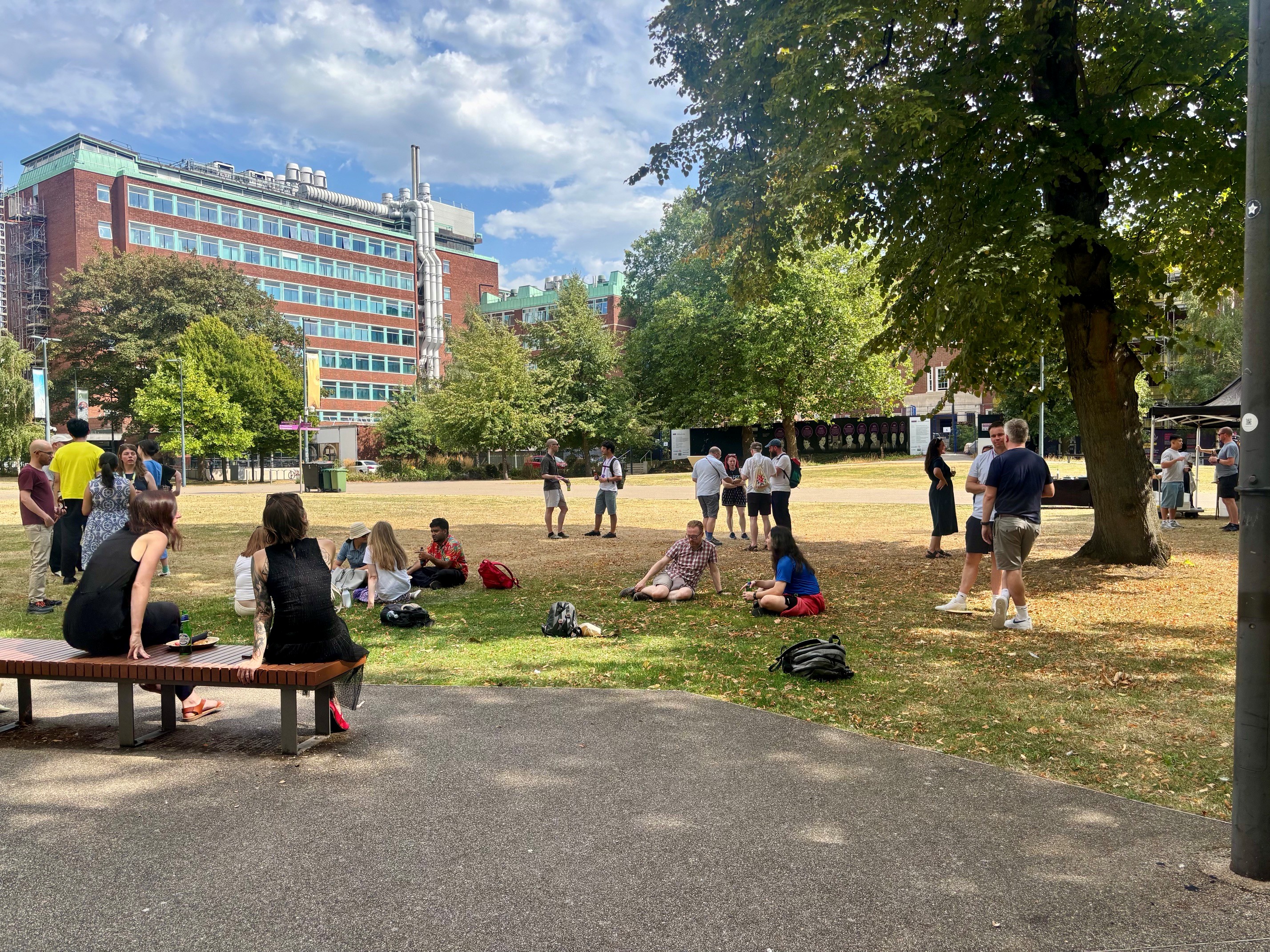
We were pleased to celebrate our Open Research Fellows with a summer BBQ in August 2026.
Find out more
The Open Research Fellowship Programme supports Academic, Professional and Technical Services colleagues to contribute their expertise to the University’s Open Research Programme. Fellows receive protected time, funding and support to address an identified need and develop outputs that can benefit researchers and research communities. Applications for the 2027 cohort are open from 7th September - 23rd October - see our website linked below for full details.
- .
- .
- .
John Hynes, Open Research Librarian and Open Research Fellowship Programme Community Manager
Ìý